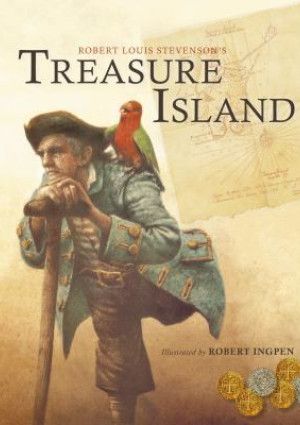
Treasure Island by Robert Louis Stevenson
Treasure Island by Robert Louis Stevenson is one of the classic children’s stories that established many of the tropes and stereotypes about pirates that still influence the tales we tell about them today.
The basic story follows Jim Hawkins, who, through a series of events, finds himself in possession of a map of the island where the famous pirate Captain Flint buried his treasure. Dr Livesey and Squire Trelawney, who finances the expedition, hire a ship and crew and set out to find the treasure. Even before they reach the island, the story has already become a classic adventure tale, with different factions and characters searching for the treasure map.
One of the things the book does particularly well is its depiction of characters and their motivations, even making some of the more blatantly silly characters genuinely menacing. For example, when I watched Muppet Treasure Island and the character Blind Pew (a pirate who is blind) arrived at the tavern, I assumed he had been added purely for humour. You can imagine my surprise when reading the original book and discovering that Blind Pew (who is also blind in the novel) appears not as a source of comedy, as he is in the Muppets version, but as a deeply menacing and frightening presence who poses a major threat for part of the story.
Because of the age of the story, there are some issues for a modern audience. Especially considering its target audience is children between the ages of 8 and 14, there are many depictions of alcohol abuse throughout the story, which is not helped by the fact that the point‑of‑view character starts out working with his family in a tavern. In fact, one of the reasons the heroes are able to triumph over the villains is that the villains spend much of their time in various states of intoxication and getting into drunken fights with one another. If you are not comfortable with your children reading stories that include these elements, I do not recommend this book for them.
Another issue is that there are very few female characters in the book, and once they leave for the island, there are effectively none. With the above‑mentioned caveats, I do recommend this story as an enjoyable and exciting read for children between the ages of 8 and 14.
Find Treasure Island by Robert Louis Stevenson
Matthew O
Format
Books
Reactions