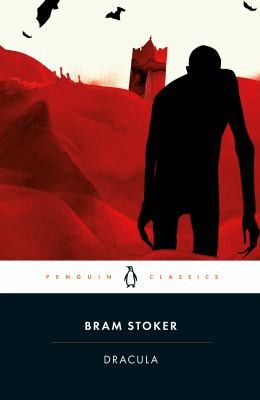
Dracula by Bram Stoker
After watching the new reboot of Dracula: A Love Story, directed by Luc Besson, I decided to revisit one of my favourite Gothic novels, the original epistolary novel Dracula, written by Bram Stoker in 1897. This really is a classic and well worth a read by anyone who loves a well-written Gothic story.
The story is well known: Dracula imprisons young lawyer Jonathan Harker in his castle, facilitates his move to England on the Demeter and then proceeds to convert the beautiful young Lucy Westenra to vampirism as she prepares to be married. Professor Van Helsing is contacted by Lucy’s concerned friends: John Seward, who is the doctor at a local ‘insane asylum’, Arthur Holmwood (Lucy’s fiancé), Quincy Morris and Mina, Lucy’s best friend since childhood and Jonathan Harker’s new wife.
The genius of Stoker’s work lies in the structure he employs. His plot is completely conveyed through the use of diaries and letters, which enables the reader to gain a clear understanding of character and perspective as we are taken into the world of each character. Stoker also uses what was, at the time, cutting-edge technology as he explores how Dr Jack and Mina transcribe the information they have gathered on the Count and his murderous invasion onto a phonograph, the first ever voice recording device. (Francis Ford Coppola, in his masterful and arguably best film version of Dracula, takes the opportunity to introduce the cinematograph in his 1992 adaptation, however, this is not in Stoker’s original novel. Coppola’s focus on the evolution of Dracula as a cinematic figure builds on Stoker’s original work.)
Stoker’s novel, whilst somewhat archaic in its language and context, still retains the freshness of a masterpiece when read today. If you haven’t read it yet, give it a go. If you read it some years ago, it could be worth revisiting.
Jenny
Format
Books
Subject
Reactions